
What Is A Sandwich Panel? Structure, Types, And Uses Explained
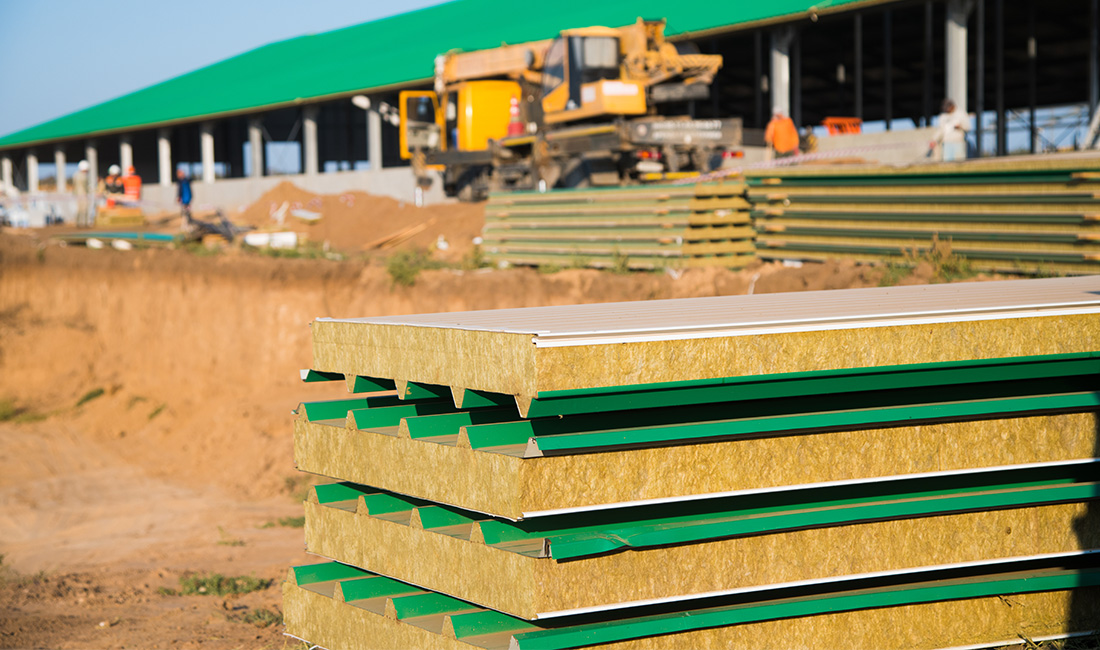
A sandwich panel is a composite building material made of two outer layers and a lightweight core bonded together to form a strong, insulated structure. It combines durability, thermal performance, and ease of installation, making it a key solution for modern building envelopes such as walls, roofs, and ceilings. This simple yet advanced design reduces construction time while improving energy efficiency—qualities that have made it standard in industrial, commercial, and modular projects worldwide.
In this article, the focus stays on clarity—explaining what sandwich panels are, how they’re made, and why they matter in today’s construction market. As an experienced insulated panel manufacturer, the discussion draws on industry data and real-world applications to highlight how material choice, specifications, and installation methods directly affect performance.
By exploring material options, common uses, sustainability factors, and future technologies, this guide helps professionals and decision-makers understand which type of sandwich panel best fits their specific project goals.
What Is a Sandwich Panel?
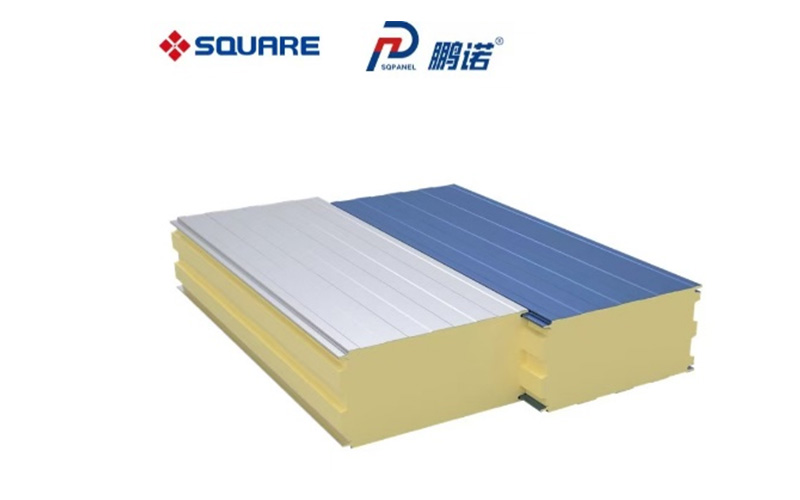
A sandwich panel is a composite building product made of three main layers. It has two outer sheets that protect the structure and one core layer in the middle that provides insulation. The outer sheets can be made of steel, aluminum, or other rigid materials, while the core is usually polyurethane (PU), polyisocyanurate (PIR), expanded polystyrene (EPS), or mineral wool.
Manufacturers bond these layers using high-strength adhesives or mechanical connections. The result is a stable and lightweight material that resists heat, noise, and moisture. Because the layers act together as one unit, the panel delivers high strength-to-weight performance and consistent thermal insulation. Its modular form also allows for quick installation on roofing, walls, or ceiling systems.
Why Use Sandwich Panels in Construction?
Builders use sandwich panels to shorten project schedules and improve building performance. They arrive at the site pre-finished, which cuts installation time and reduces labor costs. Their thermal insulation helps maintain indoor comfort and lower energy consumption.
Sandwich panels also improve fire safety and acoustic performance compared to conventional materials. Because they are prefabricated, they ensure consistent quality and reduce waste. Maintenance needs stay low since coated steel and aluminum resist corrosion and UV damage.
For businesses, these features mean reliable performance, predictable costs, and longer service life for buildings such as warehouses or clean rooms.
What are Sandwich Panels Made of?
Sandwich panels rely on two main material groups: the core and the facings. The core provides insulation and strength while keeping weight low. The facings protect against weather and give the panel its structural rigidity.
What are common core material of sandwich panel
The core layer defines how a sandwich panel performs in terms of insulation, fire safety, and strength.
Common options include Expanded Polystyrene (EPS), Polyurethane (PU), Polyisocyanurate (PIR), Rockwool, and Honeycomb structures.
EPS Core Sandwich Panels
EPS is a rigid polystyrene bead foam that is expanded and fused into boards. It is one of the most common construction cores because it is lightweight and cost-effective while providing decent insulation.
Extruded polystyrene (XPS) core Panels
XPS is also polystyrene, but produced by extrusion rather than beads, giving it a more uniform closed-cell structure. Compared with EPS, XPS generally has higher compressive strength and better moisture resistance, which makes it attractive for panels exposed to damp conditions or requiring better load capacity, such as cold-room envelopes, foundation or plinth areas, and some roof systems.
Polyurethane (PUR/PU) foam core panels
PU cores give the highest thermal insulation, with low thermal conductivity values around 0.022 W/m·K, making them ideal for cold storage and food production facilities.
Polyisocyanurate (PIR) foam core Panel
PIR cores improve on PU by offering better fire resistance and higher thermal stability, often meeting stricter safety codes for factories and warehouses.
Rockwool Core Panel
Rockwool cores, made from mineral fibers, are non-combustible (A1 classification). They provide excellent fire and sound insulation but are heavier, fitting high-fire-risk buildings like airports and power plants.
Aluminum Honeycomb Core Panel
Aluminum honeycomb consists of thin aluminum foil formed into hexagonal cells. It is not primarily a thermal insulator; instead, it provides extremely high stiffness and energy absorption at very low weight. Aluminum honeycomb sandwich panels are common in aircraft interiors, rail and ship panels, lightweight doors and floors, and architectural cladding where structural efficiency and low mass are the main goals.
What are common Facing Materials of Sandwich Panels?
The facing materials protect the panel and determine how well it resists corrosion, weather, and mechanical damage.
Metal facings are the most common. Below are the main types of facing materials and their uses:
| Material | Key Features | Typical Use |
| Galvanized Steel (GI) | Zinc-coated for corrosion protection | Exterior walls and roofs |
| Galvalume (GL) | Aluminum-zinc alloy for long-term durability | Coastal or industrial sites |
| Stainless Steel | Excellent chemical resistance | Food and cleanroom projects |
| Aluminum | Lightweight and non-rusting | Transport and decorative panels |
Surface coatings like PE (Polyester) for general use, PVDF (Polyvinylidene Fluoride) for maximum UV resistance, and SMP (Silicon-Modified Polyester) for outdoor durability extend lifespan.
Anti-bacterial coatings are applied in food or medical facilities. Thicker coatings or alloy layers improve corrosion resistance, especially in harsh or humid environments, ensuring panels last throughout their service life.
What Specifications Do You Need to Know When Buying Sandwich Panels?
When selecting sandwich panels, buyers should review several technical specifications that directly affect performance and durability. These include thermal values, fire classification, structural limits, and resistance properties.
Thermal Performance determines energy efficiency. The R-value shows how well the panel resists heat flow—higher values mean better insulation. The λ-value (lambda) indicates thermal conductivity; lower means less heat loss. Panel thickness directly influences both measurements and the building’s insulation level.
Fire Resistance ratings such as A1, A2, B, EI30, EI60, and EI120 describe how the panel reacts and resists fire. Core materials behave differently—mineral wool maintains integrity under high temperatures, while PUR or PIR cores offer shorter resistance times.
| Specification | Typical Range | Key Consideration |
| R-Value | 2.0–5.0 m²·K/W | Thermal insulation |
| Bending Strength | 0.3–0.7 kN·m² | Structural load support |
| Sound Reduction | 25–35 dB | Depends on core density |
| Thickness | 40–200 mm | Insulation and rigidity |
Mechanical Strength depends on bending strength, support spacing, and maximum panel length. Panels must span structural supports without bending beyond safe limits.
Sound Insulation varies by core type. Mineral wool panels often reach 35 dB, while lightweight EPS types provide around 25 dB.
Weather Resistance includes UV stability, anti-corrosion coating, and performance under temperature swings. Proper coatings extend service life.
Load Capacity involves wind resistance and roof foot traffic. Roof-grade panels should handle repeated access without deformation.
Moisture and Vapor Behavior matters in humid climates. Low water absorption cores and an added vapor barrier reduce condensation problems.
Types of Sandwich Panels
Each sandwich panel type serves distinct functions in construction. Material selection, structure, and special features determine thermal performance, fire resistance, hygiene level, and installation ease.
Wall Panels
Wall sandwich panels serve as both structural and aesthetic components for industrial, commercial, and modular buildings. They feature two metal facings—usually galvanized steel or aluminum—bonded to an insulated core, often polyurethane (PU), polyisocyanurate (PIR), or mineral wool. These cores provide thermal insulation values ranging from 0.018 to 0.045 W/m·K, depending on material type.
Installers can mount wall panels vertically or horizontally, depending on the desired exterior appearance. Vertical alignment offers continuous joint lines for streamlined facades, while horizontal installation allows for design variety using shadow joints or colored finishes.
Aesthetic flexibility also comes from panel profile options like micro-ribbed, flat, or corrugated surfaces. Manufacturers supply a wide color palette through durable polyester or PVDF coatings that resist corrosion and UV exposure.
Coldroom Panels
Coldroom sandwich panels maintain consistent internal temperatures in refrigerated spaces like food storage, pharmaceutical rooms, and distribution facilities. They use high-density polyurethane (PU) or polyisocyanurate (PIR) insulation cores—typically 38–45 kg/m³—which deliver low thermal conductivity for precise temperature control.
Their camlock joint structure secures panels tightly together, limiting air leakage and making disassembly or relocation easier. This system ensures a precise fit between panels and minimizes cold bridges.
Precision sealing is critical for meeting hygiene and efficiency standards. Joint gaskets and foam-in-place seals prevent vapor infiltration and condensation. With proper installation, these panels can maintain airtightness levels of less than 0.2 m³/h·m² at 50 Pa, suitable for controlled environments down to –40 °C.
Roof Panels
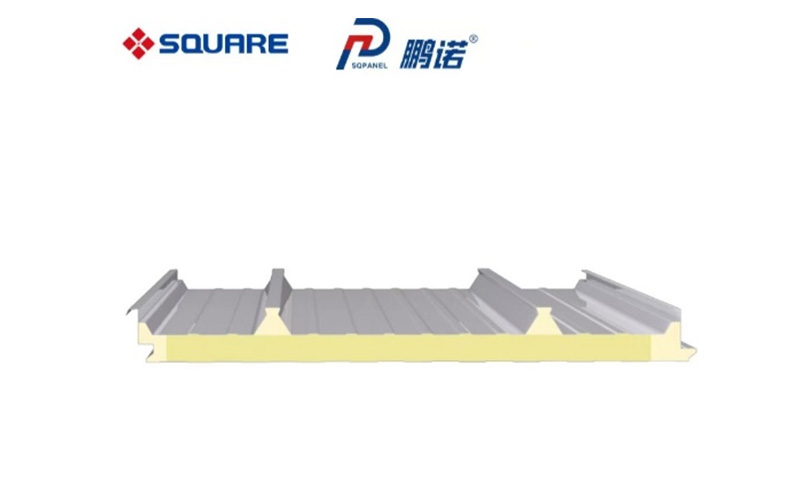
Roof sandwich panels combine load-bearing properties with insulation and water resistance. They commonly feature trapezoidal profiles for strength, with rib heights between 30 mm and 50 mm depending on span and wind load.
An anti-leak system—often a capillary break or double-gasket design—redirects water away from joints. This detail prevents infiltration even under heavy rainfall or snow loads.
To control condensation, many manufacturers apply an anti-condensate fleece on the underside of the inner sheet or integrate vapor barriers. This approach keeps indoor humidity from forming water droplets and preserves thermal performance. Proper installation pitch, typically a minimum of 5°, also aids drainage and durability.
Fireproof Panels
Fireproof sandwich panels protect people and equipment in manufacturing sites, warehouses, and data centers. The core often uses rockwool, a non-combustible mineral fiber with a melting point above 1000 °C and a density around 100–150 kg/m³.
These panels meet EI (Integrity and Insulation) fire resistance standards ranging from EI30 to EI120, depending on thickness and configuration. Tested systems limit flame spread, heat transfer, and smoke production, maintaining structural integrity for defined durations.
Both faces are typically coated steel with interlocking joints designed to block hot gases. This configuration helps maintain compartmentalization, an essential factor in meeting fire safety codes.
Acoustic Panels
Acoustic sandwich panels reduce sound transmission between or within building spaces. They use perforated steel facings combined with sound-absorbing cores such as mineral wool or perforated PIR foam.
These panels can achieve Sound Reduction Index (Rw) values between 30 and 45 dB, depending on thickness and composition. Some include an additional acoustic membrane layer for higher performance in noisy environments like factories or auditoriums.
Installers often use them for interior partitions or enclosures surrounding machinery. While many competitors overlook acoustic performance, integrated solutions improve both thermal and noise control within a single system.
Cleanroom Panels
Cleanroom sandwich panels create sterile environments for laboratories, electronic manufacturing, and pharmaceutical production. They feature flat, flush surfaces that reduce particle accumulation and simplify cleaning.
The core materials are usually PIR or rockwool for stability and low off-gassing. External faces often include anti-bacterial powder coatings or laminated PVC films that resist chemical corrosion and microbial growth.
Precise joint detailing minimizes gaps and allows complete sealing with silicone or PVC coving. When installed correctly, cleanroom panels meet international cleanliness standards such as ISO 14644-1 Class 5 to Class 8, depending on configuration and maintenance level.
What are Common Uses of Sandwich Panels
Sandwich panels serve as efficient building materials that combine strength, insulation, and quick installation. They help reduce construction time, improve energy efficiency, and provide consistent performance across a range of environments from industrial facilities to temperature‑controlled rooms.
Industrial Building
Industrial buildings often rely on sandwich panels for walls, roofs, and partitions. Their rigid metal surfaces and insulated cores provide both structural stability and thermal control. This allows factories, warehouses, and production halls to maintain steady interior temperatures and protect equipment from condensation.
Panels made with polyurethane (PU) or mineral wool offer fire resistance and low heat transfer rates, typically under 0.022 W/m·K. This performance meets industrial standards for energy efficiency and regulatory compliance.
The lightweight design also speeds up assembly, reducing labor costs and downtime on large sites.
Commercial Building Applications
Commercial developers use sandwich panels in shopping centers, office complexes, and logistics hubs. The reasons include aesthetic flexibility, reduced maintenance, and sound insulation suitable for busy environments.
Panels are available in textured finishes, coated steel, or aluminum façades that match modern architecture without added paint or cladding layers.
Energy‑efficient cores help businesses lower heating and cooling expenses, which is crucial for facilities operating year‑round. In addition, panels can integrate with curtain wall systems or load‑bearing frames. This compatibility supports mixed‑use buildings and quick renovations without disrupting operations.
Residential Construction Uses
Residential builders increasingly adopt sandwich panels for prefabricated homes, attic conversions, and garage enclosures. The material ensures proper insulation, making homes more energy‑efficient and comfortable. A wall system using 100 mm polyurethane panels can reach thermal resistances near R‑4.5 per inch, limiting heat loss in cold climates.
These panels also help achieve clean interior finishes faster. Panels arrive pre‑cut and bonded, allowing homeowners to reduce on‑site construction time by several weeks compared to traditional masonry. Their corrosion‑resistant outer coatings extend service life, minimizing repainting and repairs.
Food Processing and Cold Storage
Sandwich panels play a key role in cold rooms, freezers, and food handling areas. The tight core structure—mainly polyisocyanurate (PIR) or PU foam—keeps permeability extremely low, preserving internal temperatures as low as ‑40 °C.
Smooth, non‑porous metal faces meet hygiene regulations and simplify cleaning. The panels fit together with concealed fasteners and tongue‑and‑groove joints, reducing air leaks. This design avoids frost build‑up along edges and helps maintain refrigeration efficiency.
Installers can modify panel thickness from 60 mm to 200 mm depending on temperature and storage class requirements.
Cleanrooms and Labs
Cleanrooms, pharmaceutical factories, and research labs use sandwich panels to achieve controlled environments. The flat, sealed surfaces prevent dust accumulation and microbial growth. Panels usually include antibacterial coatings and hidden joints that allow airtight assembly.
Manufacturers often select mineral wool or high‑density expanded polystyrene (EPS) cores for these projects due to their dimensional stability and chemical resistance. Openings for ducts and wiring can be pre‑cut in the factory, maintaining precision during installation.
This helps facilities meet ISO 14644 and GMP cleanliness standards without secondary finishes or sealants.
Shopping Malls and Public Buildings
In malls, airports, stations, and sports centers, sandwich panels function as both architectural and structural components. They offer large‑span coverage suitable for wide roofs and exterior façades. With proper coating systems, panels resist corrosion and ultraviolet exposure for more than 25 years.
Acoustic insulation levels reaching 30–40 dB make them effective for busy or high‑traffic spaces. Maintenance crews can replace individual panels without major disruption, a benefit for public facilities that must remain open.
Their modularity also supports expansions or façade upgrades while maintaining design consistency and safety compliance.
Sustainability and Environmental Considerations
Modern sandwich panels support sustainable building practices by reducing energy use and material waste. Their lightweight cores—often made from polyurethane (PU), expanded polystyrene (EPS), or mineral wool—help lower structural loads, which can decrease transport and installation energy requirements.
Sandwich panels play an important role in thermal performance. Their high insulation values lower heating and cooling demands, supporting energy-efficient building standards. This makes them effective in both new construction and retrofitting older buildings for improved performance.
| Core Material | Recyclability | Typical Thermal Conductivity (W/m·K) |
| PU Foam | Limited | 0.024–0.028 |
| EPS | Moderate | 0.032–0.038 |
| Mineral Wool | High | 0.036–0.045 |
| Cork | High | 0.040–0.045 |
How do I choose the right sandwich panel for my project?
Choosing the correct sandwich panel starts with knowing what conditions the building must handle. Each project has unique temperature, fire, environmental, cost, and structural demands.
Step 1 — Identify Temperature Needs
For standard buildings, insulated wall or roof panels with polyurethane (PU) or polyisocyanurate (PIR) cores usually perform well. Cold rooms, however, require panels with higher insulation values, often using thicker PIR or PUR cores to maintain low internal temperatures.
Step 2 — Fire Requirements
Projects in buildings classified under A1 or A2 fire rating categories need non-combustible or limited-combustibility panels. Rockwool panels fit these regulations due to their mineral wool core, which resists fire and limits smoke release.
Step 3 — Environmental Conditions
For coastal or humid areas, panels with stainless steel or aluminum facings prevent corrosion and extend lifespan. In dry or indoor areas, galvanized steel facings are usually sufficient.
Step 4 — Budget vs Performance
Expanded polystyrene (EPS) panels are cost-effective for light commercial or temporary structures. PU and PIR panels offer stronger insulation and durability for moderate budgets. Rockwool panels cost more but add fire protection and sound insulation.
Step 5 — Structural Requirements
When spanning large roofs or areas exposed to high wind load, choose panels with thicker cores and higher mechanical strength. Steel-faced panels perform best for roofs, while aluminum-faced versions suit lightweight cladding.
Frequently Asked Questions
Sandwich panels vary in thickness, durability, and fire performance depending on the materials used. Core type, facing metal, and installation method each play a direct role in how the panels perform in real-world applications.
What is the standard thickness for sandwich panels?
Most sandwich panels range from 30 mm to 200 mm thick. Common thicknesses include 50 mm, 75 mm, 100 mm, and 150 mm, depending on insulation and structural needs.
Panels used for walls typically fall between 40 mm and 120 mm, while roof panels often use 60 mm to 200 mm for better thermal performance. Thicker panels offer higher insulation values and increased rigidity.
What fire rating do sandwich panels have?
Fire performance depends mainly on the core material. Panels with mineral wool or PIR (polyisocyanurate) cores usually achieve ratings of up to 1 to 2 hours under standard fire resistance tests.
Expanded polystyrene (EPS) cores, by contrast, provide lower fire resistance but remain acceptable for non-critical applications when properly protected. Each panel type must comply with local fire safety codes such as EN 13501-1 or ASTM E84 ratings.
How long do sandwich panels last?
With correct installation and maintenance, well-manufactured panels last 25 to 40 years or more. Lifespan depends on environmental conditions, surface coating quality, and whether joints and fasteners stay properly sealed.
Panels installed in coastal or industrial environments may require periodic inspection and recoating to maintain performance. Systems with high-quality steel facings and UV-resistant coatings typically show minimal aging over decades of service.
Want to Know More About Our Products?
View All Products Now