
Innovative Freezer Panels in Action: Transforming Supermarket Storage Facilities
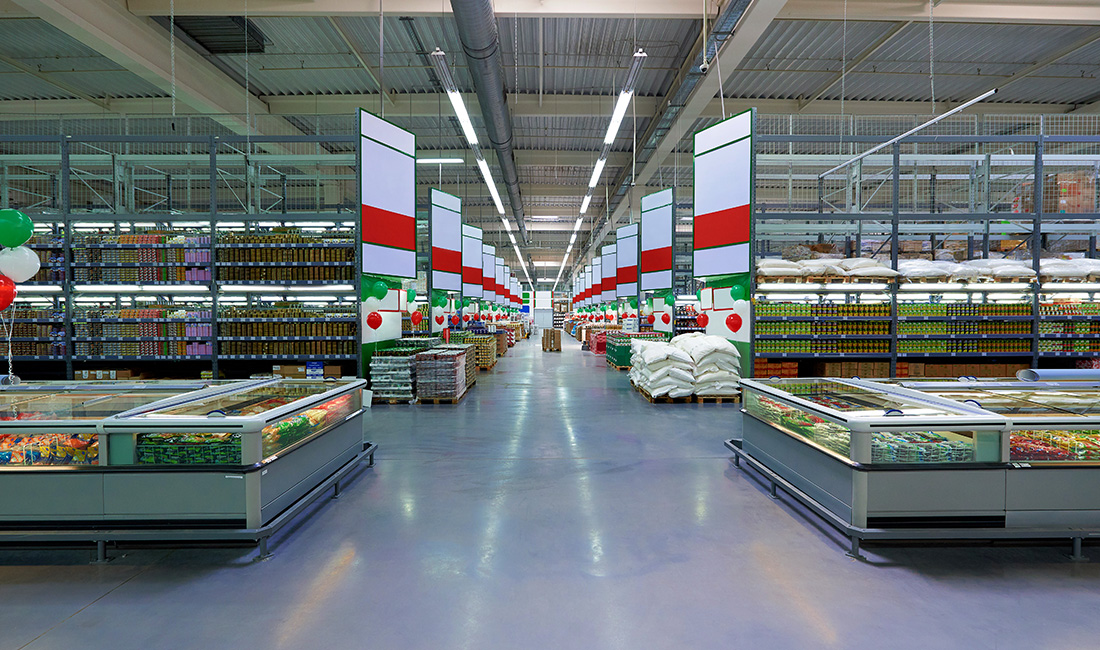
High-volume supermarkets run busy stores where fast stock turns and climbing energy bills make daily operations tough. Old cold rooms and freezer walls often let in heat, forcing refrigeration equipment and compressors to work overtime just to keep things cold.
That extra work means higher power bills and more wear on key systems. It’s a never-ending cycle that strains both budgets and equipment.
Innovative freezer panels are changing the storage game by cutting heat transfer and keeping temperatures steady. These solutions utilize insulated metal panels with high R-values and tight, sealed joints.
A foam core is typically sandwiched between steel faces, slowing heat flow and stopping air leaks. This steadier thermal envelope helps refrigeration systems run less, which cuts energy use and supports food safety.
Switching to modular panel systems has also revolutionized how upgrades get done. Crews can now install panels in sections, so build times are shorter and stores don’t face as much disruption.
Speed is crucial—refrigeration can’t go offline for long, since every hour of downtime risks lost product and sales.
Why Traditional Cold Storage Infrastructure Fails to Meet Operational Needs
Many established supermarkets still depend on cold storage systems from decades ago. Those legacy systems often struggle to control energy use or protect perishable goods under today’s demanding standards.
Escalating Energy Costs and Thermal Inefficiency
Older cold storage facilities often feature aging polyurethane foam panels with degraded insulation values. Over the years, moisture intrusion weakens thermal efficiency, allowing heat to slip through walls and ceilings.
This thermal bridging forces compressors to run longer cycles just to hold the right temperature. Panel joints and door frames frequently leak air—warm air creeps in, while cold air leaks out.
For operators, energy use keeps climbing, resulting in higher overheads from electricity bills rather than increased sales. Equipment works harder, but storage conditions don’t improve.
Compressors rack up more hours, leading to higher maintenance costs and shorter service life. Retailers often find themselves stuck with high energy costs and no clear way out without a structural upgrade.
Critical Risks to Product Integrity
Thermal weaknesses lead to unstable internal temperatures. Sensors often report frequent temperature swings during loading, restocking, and busy store hours.
Perishable items like frozen meats and dairy can go through partial thaw and refreeze cycles. Traditional panels simply cannot seal in cold air quickly enough after door openings, allowing heat to rush in faster than the system can handle.
Products near doors face the most risk, which translates to reduced shelf life and higher spoilage. For supermarkets, these losses show up as significant shrink and missed revenue.
Understanding High-Performance Freezer Panels and Their Role in Optimizing Thermal Efficiency
Modern supermarket cold storage needs precise temperature control and strict hygiene. Insulated panels now help cut heat gain, lower energy use, and meet stringent food safety standards.
Next-Gen Insulation Materials (PUF/PIR)
Facilities are increasingly installing insulated metal panels with PUF (polyurethane foam) and PIR (polyisocyanurate) cores. These deliver superior R-values (often R-6 to R-7 per inch), effectively slowing heat transfer through walls and ceilings.
Both foams rely on a closed-cell structure that traps gas and blocks air movement, minimizing heat intrusion. This keeps temperatures stable and drastically reduces compressor run time.
Compared to concrete or older insulated panels, PUF and PIR are lighter and seal tighter at the joints. For facility managers, this means faster installation and fewer thermal leaks at the seams.
Key technical advantages include:
- Low thermal conductivity to significantly slow heat flow.
- Moisture resistance to limit condensation inside panels.
- Panel modularity for flexible cold storage solutions.
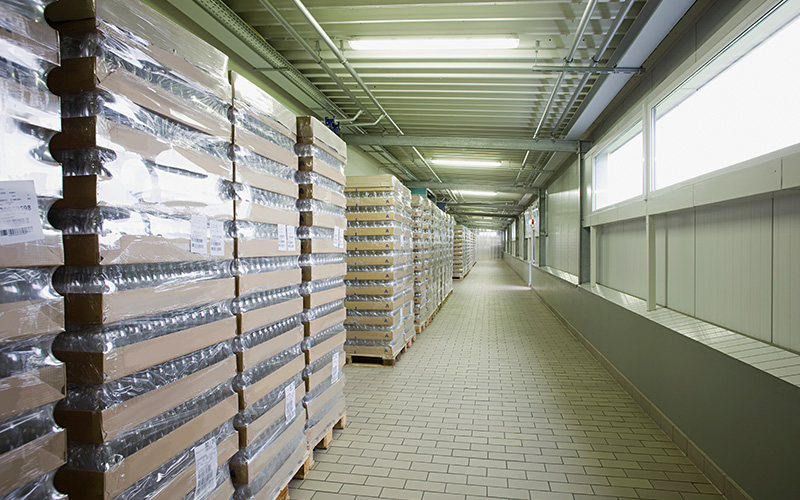
Hygiene-First Design for Retail Compliance
Supermarket freezers see spills, wash-downs, and heavy foot traffic. Modern insulated panels feature food-grade surface coatings built specifically for direct food environments.
These coatings fight mold and bacteria by creating a smooth, non-porous surface. Staff can clean up faster, and there’s less risk of residue building up.
The panels hold up to wash-down cleaning without getting damaged, allowing crews to use approved cleaning agents and water sprays without worry.
Compliance features include:
- FDA-aligned material standards for food contact zones.
- Sealed joints to prevent moisture ingress.
- Corrosion-resistant metal skins for long service life.
How Modular Freezer Panel Technology Enables Rapid Installation with Minimal Disruption
Retailers are switching to prefabricated freezer panels to speed up construction and keep stores running. The system cuts on-site labor, keeps noise down, and lets crews work around daily deliveries in active cold storage areas.
The “Plug-and-Play” Modular Advantage
Factory-prefabricated insulated panels typically utilize a tongue-and-groove locking system. Each panel arrives pre-cut, with insulation and metal skins already attached.
Crews lock panels together on-site, skipping the slow process of building walls piece by piece. By avoiding wet trades like concrete and masonry, installers wrap up projects much faster.
While traditional cold room builds can drag on for months, modular crews can finish walk-in freezer shells in a matter of weeks. Stores don’t need to close aisles for long or shut down entirely.
The panels also match up easily with freezer doors, ceiling pieces, and service openings. Overnight installations are often possible, helping keep nearby cold storage operational.
Key installation features:
- Prefabricated wall and ceiling panels.
- Mechanical cam-lock or tongue-and-groove joints.
- Pre-cut openings for doors and utilities.
Customization for Complex Spaces
Many supermarket locations sit inside older buildings with odd layouts. Standard box-shaped cold rooms often won’t fit without wasting valuable space.
Modular panel systems solve this by offering custom widths, heights, and corner angles. Manufacturers can trim panels at the factory to fit columns, low ceilings, and uneven walls.
Insulation thickness stays the same, so thermal performance doesn’t drop. This gives operators stable temperatures across the whole walk-in freezer, even in tricky architectural spaces.
Crews can adjust panel placement on the fly, eliminating the need to redesign the whole cold room. That flexibility allows retailers to boost freezer capacity inside existing footprints, skipping the hassle of new construction.
On-site adaptations often include:
- Offset walls around columns.
- Sloped ceilings under roof trusses.
- Multi-zone cold room layouts within one enclosure.
Quantifiable Results Demonstrating How Upgrading Freezer Panels Improved Bottom Lines
Freezer panel upgrades bring real gains in energy efficiency and operating costs. Retailers also gain more storage capacity without swapping out core infrastructure, setting them up for the future with less risk.
Operational ROI: Energy Savings & Cost Reduction
By swapping out old freezer walls for insulated panels rated at R-32 to R-43 (depending on thickness), facilities ensure less heat sneaks in, meaning compressors run less and use less electricity.
Typical industry results show:
- Energy Reduction: Upgraded stores can see a 25–30% drop in freezer energy use.
- Cost Savings: For a typical high-volume store, this can translate to estimated annual savings of $30,000–$40,000, depending on local utility rates.
Better insulation also cuts down on short cycling. Compressors don’t have to start up as often, since temperatures stay steady.
Projections indicate that operators can achieve a 15–20% longer life from their refrigeration systems, meaning less money spent on maintenance and new equipment. Lower power use also shrinks the store’s carbon footprint, helping hit sustainability goals without changing daily routines.
Future-Proofing: Scalability for Growth
Modern facilities are choosing modular, demountable freezer panels instead of fixed cold rooms. Each panel locks in but can be taken out and reused—making them transferable assets, not just sunk construction costs.
When a store needs to expand its frozen food aisles, crews can often reuse a significant percentage of existing panels. This dramatically reduces build time and eliminates new material costs.
The panel system makes multi-zone layouts easy. Retailers can rework freezer, chill, and prep areas as product lines change. That flexibility protects the investment and fits the future of cold storage, where demands shift but efficiency has to stay high.
Frequently Asked Questions
How do improved freezer panels enhance energy efficiency in cold storage?
Improved freezer panels rely on insulated metal panels with closed-cell foam cores, like polyisocyanurate or polyurethane. The foam traps air in sealed cells, so heat has a tough time sneaking in from outside. These panels double as a vapor barrier; when joints and surfaces are properly sealed, they keep moisture out and prevent ice buildup. In real-world use, compressors don’t have to work as hard, leading to a welcome dip in electricity bills.
What are the cost implications of installing innovative freezer panels in storage facilities?
Innovative panels usually come with a higher upfront price tag than basic wall systems because they combine structure and insulation in a single, high-efficiency piece. However, since the panels arrive prefabricated, installation moves quickly, and labor costs drop. Over time, significant energy savings help balance out that initial investment, while lower power consumption and fewer repairs keep operating costs in check.
How do innovative freezer panels improve the sustainability of cold storage operations?
Many modern freezer panels use foam cores that rely on blowing agents with low global warming potential, marking a step up for the environment compared to older materials. Better insulation means the facility uses less energy overall, leading to fewer emissions from electricity and a lighter carbon footprint during day-to-day operations.
What technological advancements are included in the latest freezer panel designs?
Modern freezer panels rely on precision-locked joints and gasketed seams to tighten up the building envelope and minimize air leaks. Some setups now include smooth stainless steel or FRP (Fiberglass Reinforced Plastic) skins. These materials fight off corrosion and make cleaning a breeze, which enhances food safety and cuts down on washdown time.
Want to Know More About Our Products?
View All Products Now